M11-Dvs Lumix G9
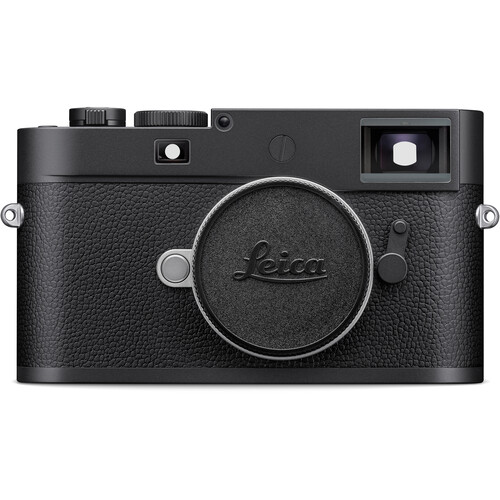 Leica
M11-D (2024)
Starting from £8195 new
Best for Street, documentary & photographic purists
View M11-D
Leica
M11-D (2024)
Starting from £8195 new
Best for Street, documentary & photographic purists
View M11-D
GearScore™ Verdict — Which should you buy?
Street, Documentary & Photographic Purists — M11-D (2024): A rangefinder with no screen — 60MP, manual focus, total presence. The most focused camera ever made.
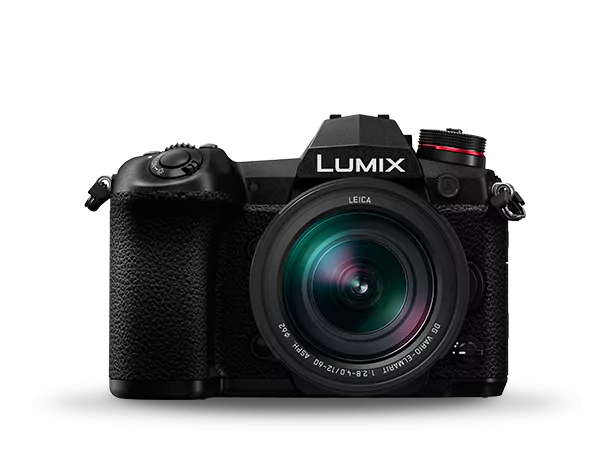
Wildlife, Sports, Travel — Lumix G9 (2017): The G9 showed that Micro Four Thirds could compete for fast-action stills.
Who should buy what
M11-D (2024)
- Experienced rangefinder photographers who want to eliminate chimping and be fully present
- M11 users who want to deepen their relationship with the photographic process
- Documentary and street photographers who believe the screen distracts from the moment
- Collectors and Leica enthusiasts who value the philosophy as much as the output
Lumix G9 (2017)
- Wildlife photographers who want fast burst and long telephoto reach at lower cost
- MFT system users who prioritise stills over video
Quick take: The m11-d has the highest resolution at 60mp; the lumix g9 is the most affordable; only the lumix g9 is weather sealed. Scroll down for the full spec breakdown.
Full specifications
| Specification | M11-D (2024) | Lumix G9 (2017) |
|---|---|---|
| Price | £8,195 | £549 |
| Sensor | 60MP full-frame BSI CMOS — 64GB internal storage | Micro Four Thirds Live MOS |
| Resolution | 60.0MP | 20.3MP |
| Video | None — this is a stills-only camera | 4K 60fps, C4K 24fps |
| Autofocus | Manual focus only — rangefinder coupled focusing | 225-point contrast-detect DFD |
| Stabilisation | None — manual rangefinder camera | 5-axis IBIS, 6.5 stops (6.0 stops dual IS) |
| Burst Rate | 4.5fps | 20fps mechanical, 60fps electronic |
| Battery Life | ~700 shots (CIPA) | 400 shots (CIPA) |
| Weight | 530g body only | 658g (body only) |
| Dimensions | 138.9 × 80.0 × 38.5mm | 136.9 × 97.3 × 91.6mm |
| Weather Sealed | No | Yes |
| Viewfinder | Optical rangefinder viewfinder — 0.73× magnification | EVF 0.83× 3.68M-dot |
| Screen | None — no rear LCD by design | 3.0" fully articulating touchscreen, 1.04M-dot |
| Mount | Leica M-mount — compatible with all M lenses | Micro Four Thirds |
| Memory Cards | 64GB internal + SD UHS-II slot | 2× SD UHS-II |
| Connectivity | USB-C, Wi-Fi, Bluetooth | Wi-Fi, Bluetooth 4.2, USB-C, HDMI full-size |
Suitability by genre
| Genre | M11-D | Lumix G9 |
|---|---|---|
| Street | — | |
| Portrait | ||
| Travel | ||
| Landscape | ||
| Sports | — | |
| Vlogging & Video | ||
| Sports & Action | — | |
| Wildlife | — |
GearScore™ suitability scores are based on aggregated purchaser reviews weighted by photography genre. See how scores are calculated →
More comparisons with M11-D
Camera family history