Best cameras for beginners
The best beginner cameras in 2026 — versatile picks that let you explore portraits, landscapes, street, and video before you find your niche and upgrade.
Our top recommendation
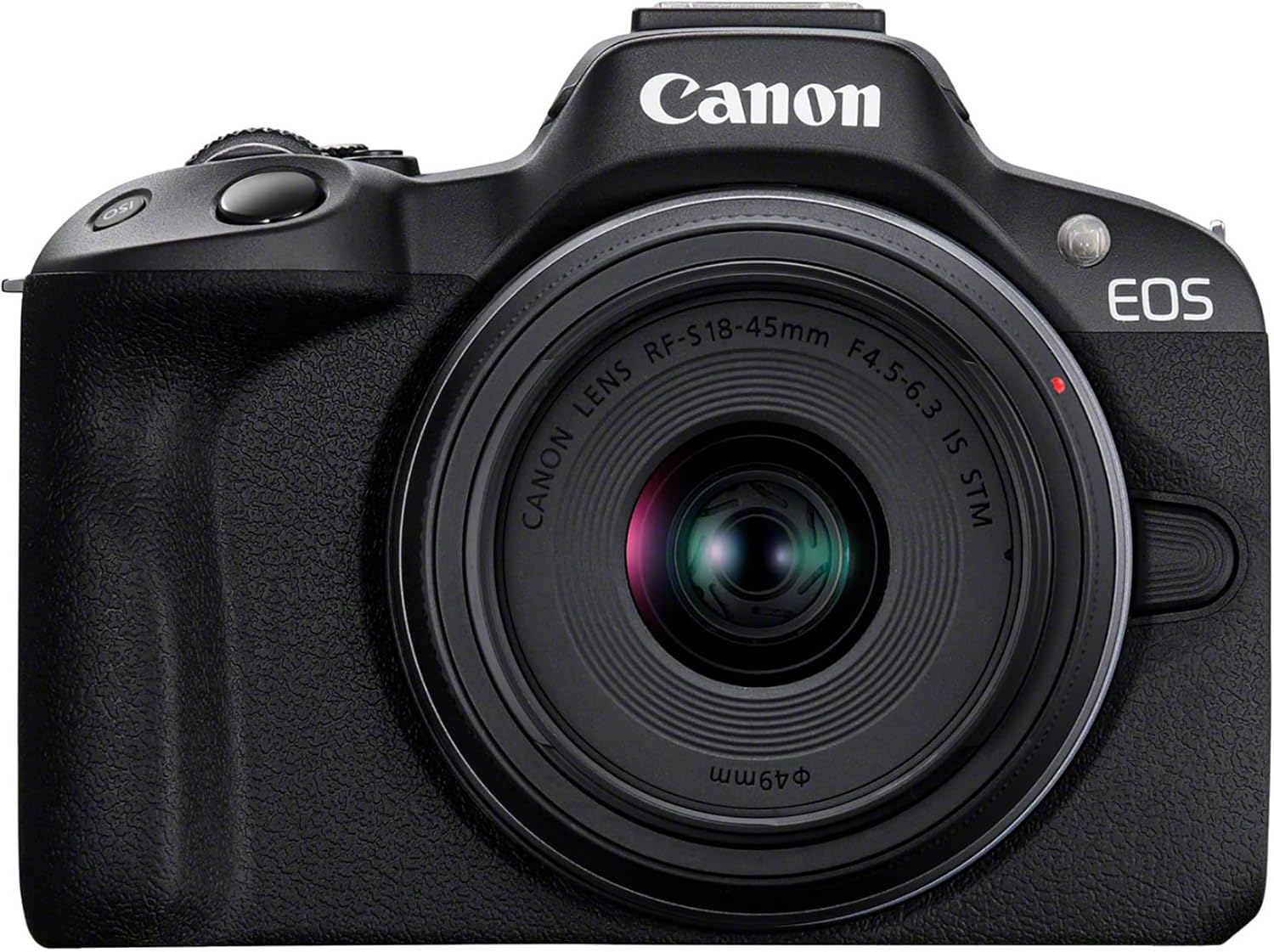
Canon EOS R50
APS-C Mirrorless · Body only
~£599
The best all-round beginner camera. Canon's Dual Pixel AF makes it nearly impossible to miss a shot, the guided interface explains settings in plain language, and it performs across portraits, landscapes, street, and video without asking you to specialise. The RF mount means any lens you invest in now carries forward if you upgrade to a full-frame Canon body later.
Why we chose it
Learning photography is a process of experimentation. You might start with landscapes but discover a love of street photography. You could begin shooting video and find you actually prefer portraits. The Canon EOS R50 is our top beginner pick precisely because it doesn't box you in. Its Dual Pixel CMOS AF II is the best autofocus system at this price point — so you won't miss moments while you're still learning exposure. And when you eventually discover your niche and want to upgrade, the RF mount means your lenses carry forward.
Image quality
The 24.2MP APS-C sensor produces clean, detailed images up to ISO 3200. Canon's colour science is warm and flattering — particularly for portraits and skin tones — and the in-camera JPEG processing means many beginners never need to open a RAW editor to get photos they're proud of.
Handling & feel
Canon has put serious effort into making the R50 approachable for people who have never held a camera before. The interface actively guides you through settings in plain language, and the vari-angle touchscreen makes composing at awkward angles intuitive. As you develop your skills, the camera reveals more manual controls — it grows with you.
Autofocus
Dual Pixel CMOS AF II detects faces, eyes, animals, and vehicles reliably in real-world conditions. For everyday shooting — family, friends, pets, street — it just works. You'll spend less time checking missed focus and more time being present in the moment. This matters enormously when you're still thinking about exposure and composition.
Lens ecosystem
Canon's RF mount is the company's long-term ecosystem. RF-S lenses designed for APS-C are steadily expanding — the RF-S 18-45mm kit lens, RF-S 55-210mm, and RF 50mm f/1.8 STM (~£199) are all excellent starting points. Full-frame RF lenses also work on the R50, which means any glass you buy now follows you if you ever step up to a Canon EOS R6 or R5 later.
Best for
Portraits & people
Dual Pixel AF locks on to eyes reliably. Canon's warm colour science renders skin beautifully straight from camera.
Great fitFamily & everyday
Lightweight and approachable — the guided modes mean even non-photographers can use it without reading a manual.
Great fitVideo & vlogging
Vari-angle screen, subject tracking, and clean HDMI make it one of the best beginner video cameras available.
Great fitStreet photography
Compact and discreet. Lacks the tactile physical dials experienced street shooters prefer, but capable.
Good, not idealLandscape & travel
Strong image quality and good dynamic range. A tripod is worth having without IBIS for long exposures.
Good, not idealSports & action
15fps burst is decent, but 4K video has a crop and subject tracking at speed lags dedicated action cameras.
LimitedStrengths
- Most intuitive interface of any beginner camera — guided modes explain settings
- Dual Pixel AF II is class-leading — you won't miss shots while you're learning
- Versatile: portraits, landscapes, street, video all within reach
- Lightweight and comfortable for daily carry at 375g
- RF mount future-proofs lens investments for Canon upgraders
- Excellent Canon colour science — beautiful results straight from camera
Weaknesses
- No in-body image stabilisation — a tripod helps for landscapes
- 4K/30p only (4K/24p is uncropped); no 4K/60p
- Single card slot — back up regularly
- RF-S lens range still growing compared to mature systems
- Plastic build feels less premium than metal-bodied rivals
Also worth considering
Sony ZV-E10 II
APS-C Mirrorless · Creator camera
If you already know video and content creation is what draws you to a camera, start here instead of the R50. The ZV-E10 II was built specifically for creators — articulating screen, 3-capsule directional mic, Eye AF during video, 4K/60p. The best beginner camera for aspiring YouTubers.
Fujifilm X-T30 II
APS-C Mirrorless
For beginners who want to actively develop their photographic eye, the X-T30 II is the pick. Physical dials for shutter speed, ISO, and exposure force you to engage with settings manually — and Fujifilm's 19 film simulations make every outing feel like a creative session. This camera will teach you more.
Nikon Z30
APS-C Mirrorless
If you want a capable, lightweight camera with no unnecessary complexity, the Z30 is it. No viewfinder, no fuss — just excellent subject tracking AF, a flip screen, and Nikon's reliable image quality. For beginners who want to pick it up and shoot without reading a manual.
The verdict
There's no single best beginner camera — the right choice depends on what draws you to photography in the first place. If you genuinely don't know yet, the Canon EOS R50 is the safest pick: it's the most intuitive camera on the market, produces beautiful results across virtually every shooting style, and the RF mount means your lens investment carries forward when you're ready to upgrade. Already leaning towards YouTube or social video? Start with the ZV-E10 II instead. Love the idea of physical dials and developing a photographic eye? The Fujifilm X-T30 II will teach you more and reward you longer. Just want something simple to pick up and use without overthinking it? The Nikon Z30 will never overwhelm you. Whichever you choose: use it across different types of shooting — portrait sessions, street walks, landscape trips, video projects. The camera that gets you outside and experimenting is always the right one. When you eventually discover your niche, you'll know exactly what to upgrade to.
Also worth considering
Canon EOS M50 II
APS-C · Classic beginner pick, good used value
~£349
Olympus OM-D E-M10 IV
Micro Four Thirds · Compact with built-in IBIS
~£469