Best cameras for street photography
The best cameras for street photography in 2026 — compact, discreet bodies with fast controls, excellent image quality, and the character to match the genre.
Our top recommendation
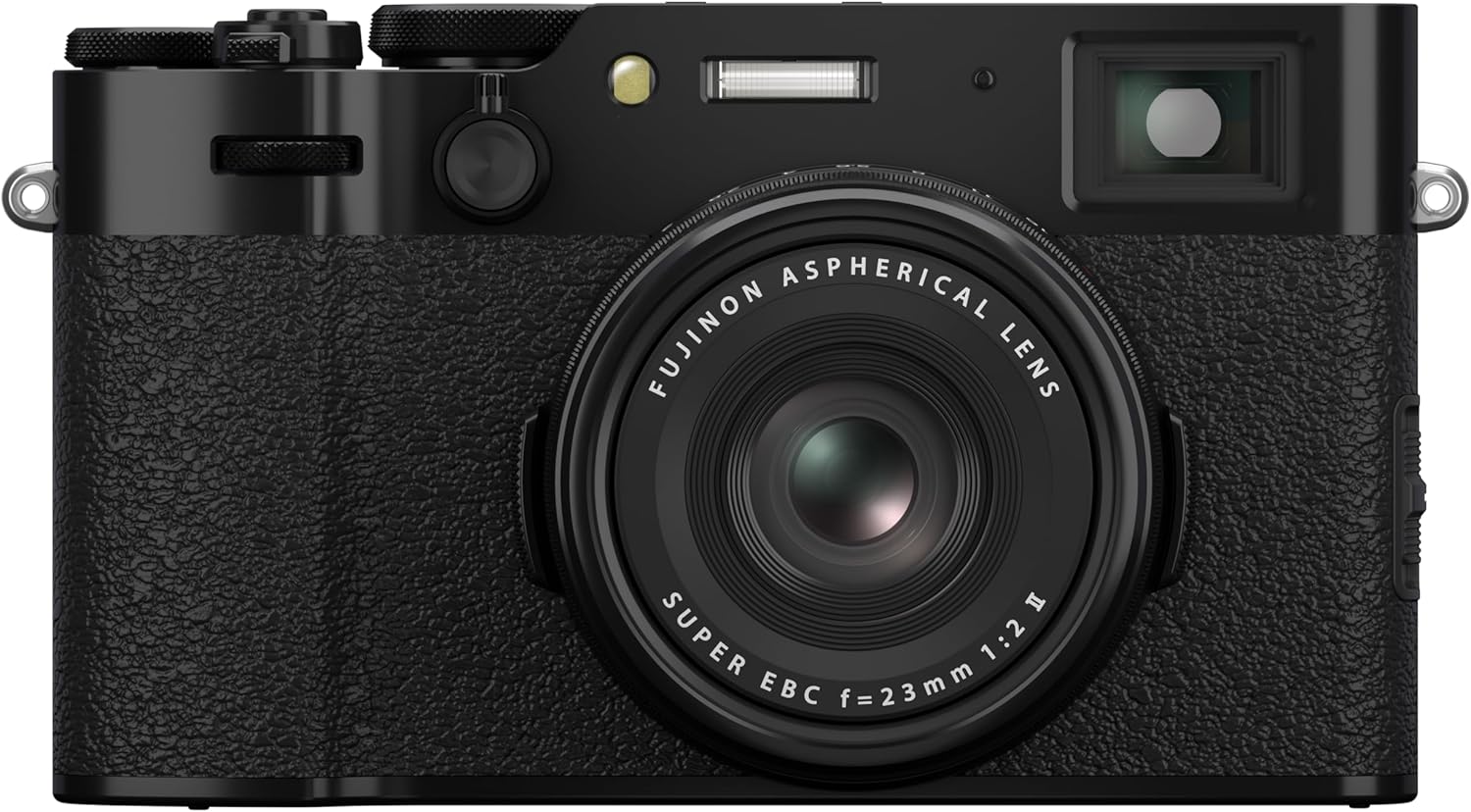
Fujifilm X100VI
APS-C Fixed-lens Compact
~£1,299
The X100VI is the definitive street camera of 2026. A 40MP APS-C sensor, 7-stop IBIS, and Fujifilm's 19 film simulations — all in a compact, fixed-lens body that draws zero attention on the street.
Why we chose it
Street photography rewards cameras that get out of the way. The X100VI does this better than almost anything else: it looks like a vintage film camera, makes almost no noise, and sits in your hand naturally without demanding attention. People don't react to it the way they react to a DSLR with a 70-200mm attached — and that invisibility is what makes candid, real moments possible.
Image quality
The 40MP X-Trans CMOS 5 HR sensor captures extraordinary detail for a compact camera. At street-relevant ISOs (800–6400), the sensor handles grain with a film-like texture that suits documentary and street work naturally. Fujifilm's colour science — particularly Velvia for saturated scenes and Acros for black and white — produces images that feel complete straight from the camera.
Handling & feel
Physical aperture ring, shutter dial, and exposure compensation dial mean your three most important exposure variables are accessible without menus. In street photography this matters enormously — you have a second, not ten. The hybrid viewfinder is unique: switch to optical and you see the world, not a screen, which changes how you compose.
Autofocus
Phase-detect AF with subject tracking handles street portraits reliably. It won't match Sony's AI system for complex tracking scenarios, but for the candid and semi-candid work that defines street photography, it's more than adequate — and the zone focusing option lets experienced shooters pre-set hyperfocal distance and shoot instinctively.
Lens ecosystem
The X100VI has a fixed 23mm f/2 Fujinon lens (35mm equivalent). This is either a feature or a limitation depending on how you shoot. Most serious street photographers consider 35mm the ideal focal length and the fixed-lens constraint a feature — it removes a decision and forces creative commitment. Optional wide and tele conversion lenses are available if you need range.
Best for
Street & documentary
Small body, quiet shutter, and a 35mm equivalent FOV — the classic street combination. Nobody notices you.
Great fitTravel photography
Fixed lens eliminates the lens-change decision. IBIS handles handheld shots in low-light cafes and interiors.
Great fitPortraits on location
Film simulations and f/2 aperture produce portrait results with genuine character. Beautiful in natural light.
Great fitNight & low light
40MP X-Trans sensor and IBIS enable sharp handheld shots well into the night. High-ISO grain is pleasingly filmic.
Great fitAction & sport
20fps burst helps but subject tracking isn't class-leading. Not the right tool for fast-moving sport.
LimitedStudio work
Fixed lens and compact sensor size limit studio versatility. Purpose-built for outdoor and available-light work.
LimitedStrengths
- Compact and completely discreet — nobody looks twice
- 40MP APS-C sensor — crop heavily and still have detail
- 7-stop IBIS — handheld low-light that would stump most cameras
- Hybrid OVF/EVF — optical viewfinder changes how you shoot
- 19 film simulations — most photographers never touch RAW
- Weather-sealed — keeps shooting in rain
Weaknesses
- Fixed lens — 23mm f/2 only, no zoom or alternative focal lengths
- Supply has been consistently limited since launch
- £1,299 is a significant spend for a fixed-lens camera
- Single SD card slot — no backup
- 4K video limited to 30fps
Also worth considering
Ricoh GR IIIx
APS-C Fixed-lens Compact
The GR IIIx is the most pocketable serious APS-C camera made. A 40mm equivalent fixed lens, 26MP APS-C sensor, and a cult following among street photographers who value absolute discretion over every other consideration.
Fujifilm X-Pro3
APS-C Mirrorless
The X-Pro3's hybrid optical/electronic viewfinder and rangefinder-style layout create a street shooting experience unlike any other mirrorless camera. Deliberately minimal controls encourage a slower, more considered approach.
Nikon Zf
Full-frame Mirrorless
A retro-styled full-frame body that looks like a film camera on the street. Nikon's subject detection AF and full-frame image quality in a body that draws admiration rather than suspicion. A unique option for street portraiture.
The verdict
Street photography rewards cameras that disappear. The Fujifilm X100VI is the closest thing to a perfect street camera available in 2026 — it's compact, discreet, fast to operate, and produces images with a film-like quality that suits the genre instinctively. The Ricoh GR IIIx is smaller still: a pocketable APS-C camera that many serious street photographers use as their only camera. For those wanting interchangeable lenses, the Fujifilm X-Pro3 offers a rangefinder-style body with a hybrid optical/electronic viewfinder — a genuinely different shooting experience that changes how you engage with your subjects. All three prioritise discretion and speed of operation over spec-sheet numbers.
Also worth considering
Ricoh GR III
APS-C compact · 28mm equiv — the classic GR focal length
~£849
Fujifilm X-T30 II
APS-C · Compact with interchangeable X-mount lenses
~£499