Best cameras for vlogging & content creation
The best cameras for vlogging and YouTube content creation in 2026 — flip screens, reliable Eye AF in video, clean 4K footage, and compact form factors for solo creators.
Our top recommendation
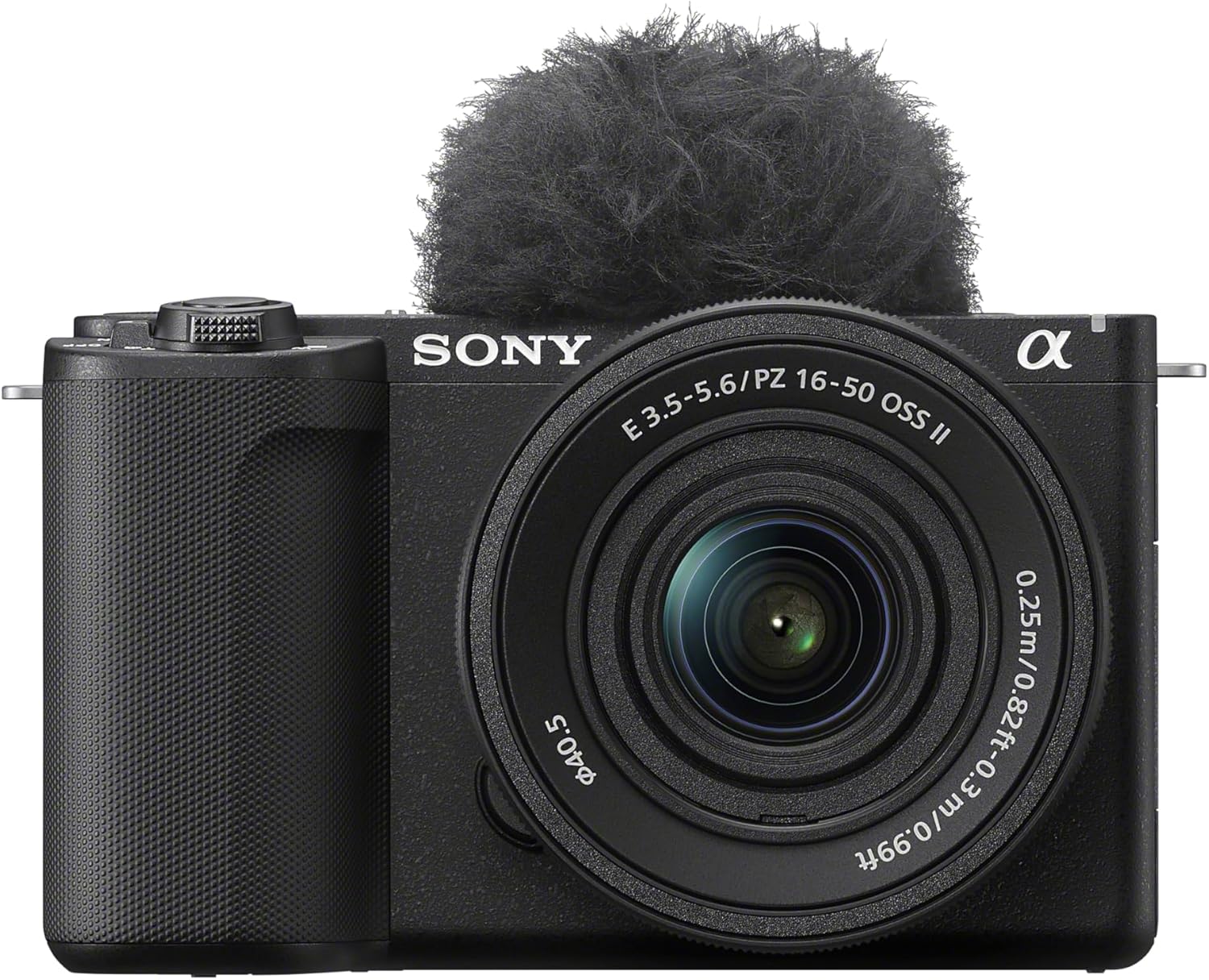
Sony ZV-E10 II
APS-C Mirrorless · Body only
~£699
Purpose-built for solo content creators. Fully articulating touchscreen, AI Eye AF in video, 4K/60p oversampled footage, and a mic input — all in Sony's most affordable interchangeable-lens vlogging body.
Why we chose it
Vlogging cameras have one job the spec sheet doesn't capture: they have to work when you're alone, self-directing, and looking at yourself on a two-inch screen. The ZV-E10 II was designed from the ground up for that use case. The articulating screen flips fully forward. Eye AF in video tracks your face and holds it sharp through movement, expression, and turning to gesture. You do not need a camera operator.
Image quality
4K/60p oversampled from a 26MP APS-C sensor produces footage that holds up on a 4K monitor or a 6-inch phone screen equally. The BSI CMOS sensor handles the low-light conditions of typical indoor content creation without aggressive noise reduction that softens detail. S-Log3 support gives colour-graders proper flexibility in post if your production requires it.
Handling & feel
At 293g, the ZV-E10 II goes everywhere without a second thought. It fits in a jacket pocket with a compact prime attached — the 16-50mm kit zoom collapses to near-nothing. The Product Showcase feature instantly shifts AF to objects you hold up to camera, which is useful for review content.
Autofocus
Sony's AI Eye AF in video is the best reason to buy this camera. It locks to your face in the frame, holds through movement, and re-acquires if you look away and back. The hit rate approaches 100% for standard talking-head and walk-and-talk content — which removes the most frustrating variable from solo content creation entirely.
Lens ecosystem
The Sony E-mount is the most versatile APS-C ecosystem available. For vlogging, the Sony 10-18mm f/4 OSS (~£399) is the wide-angle solution for selfie-style filming with room for environment. The Sony 16-50mm kit zoom is a practical starting lens. The Sigma 16mm f/1.4 DC DN (~£299) is the premium wide prime for cinematic indoor content.
Best for
Solo YouTube / vlogging
Fully articulating screen + Eye AF in video. This is the core use case this camera was designed for.
Great fitTalking-head content
Eye AF holds on your face through movement and expression changes. No hunting, no focus pulls.
Great fitWalk-and-talk filming
Compact and light enough to shoot moving content. Electronic IS stabilises handheld footage.
Great fitShort-form (TikTok/Reels)
4K/60p gives you slomo clips and smooth footage for short-form vertical and horizontal content.
Great fitPhotography alongside video
26MP stills are capable — but the lack of IBIS and no EVF makes it less optimal for dedicated photography.
Good, not idealProfessional production
No IBIS, no dual card slots, and limited battery life make it unsuitable for professional broadcast work.
LimitedStrengths
- Purpose-built for solo creators — flip screen + Eye AF in video
- 4K/60p oversampled from APS-C — genuinely good footage quality
- 293g — lightest interchangeable-lens camera on this list
- E-mount access to Sony's full lens ecosystem
- 3.5mm mic input — critical for content audio quality
- AI Eye AF holds in video across movement and expression
Weaknesses
- No in-body image stabilisation — relies on electronic IS
- No viewfinder — EVF-free design limits usability outdoors in bright sun
- Battery life limited (~100 mins video recording)
- Single SD UHS-I slot — no backup, and slower write speed
- No weather sealing
Also worth considering
Fujifilm X-S20
APS-C Mirrorless
The better choice if your content isn't purely video. Excellent stills, 6-stop IBIS for smooth handheld footage, 720-shot battery life (three times the ZV-E10 II), and Fujifilm film simulations that reduce colour grading to a single tap in post.
Canon EOS R50
APS-C Mirrorless
Canon's beginner content-creation camera — compact, light, and featuring Dual Pixel AF that tracks subjects effortlessly. Fully articulating screen and excellent Canon colour science make it a natural vlogging entry point for creators already in the Canon ecosystem.
Sony A7C II
Full-frame Mirrorless
The premium option for YouTube creators who want cinema-quality full-frame footage. The A7C II's compact body, 4K/60p 10-bit, and AI Eye AF in video gives established creators a genuine production-quality upgrade without a cumbersome body size.
The verdict
Vlogging has a different set of demands from professional video production: you're usually shooting yourself, alone, without a camera operator. That changes everything. You need a fully articulating screen, reliable Eye AF in video mode, a compact body you can run with, and a microphone port. The Sony ZV-E10 II was built precisely for this — it's Sony's best vlogging camera at an accessible price. Fujifilm's X-S20 is the stronger all-rounder if your content includes stills, travel, and longer battery life. For creators who want full-frame quality in video without sacrificing portability, the Sony A7C II is the premium pick — particularly for YouTube creators whose content warrants the investment in cinematic image quality.
Also worth considering
Sony ZV-E10
APS-C · Previous generation — still excellent, often available cheaper
~£449
DJI Pocket 3 Creator Combo
Gimbal camera · Simplest setup for smooth video, no interchangeable lenses
~£479