Best cameras for dark skin tones in natural light
The best cameras for photographing dark skin tones in 2026 — bodies with accurate metering, strong dynamic range, and colour rendering that doesn't require extensive correction in post.
Our top recommendation
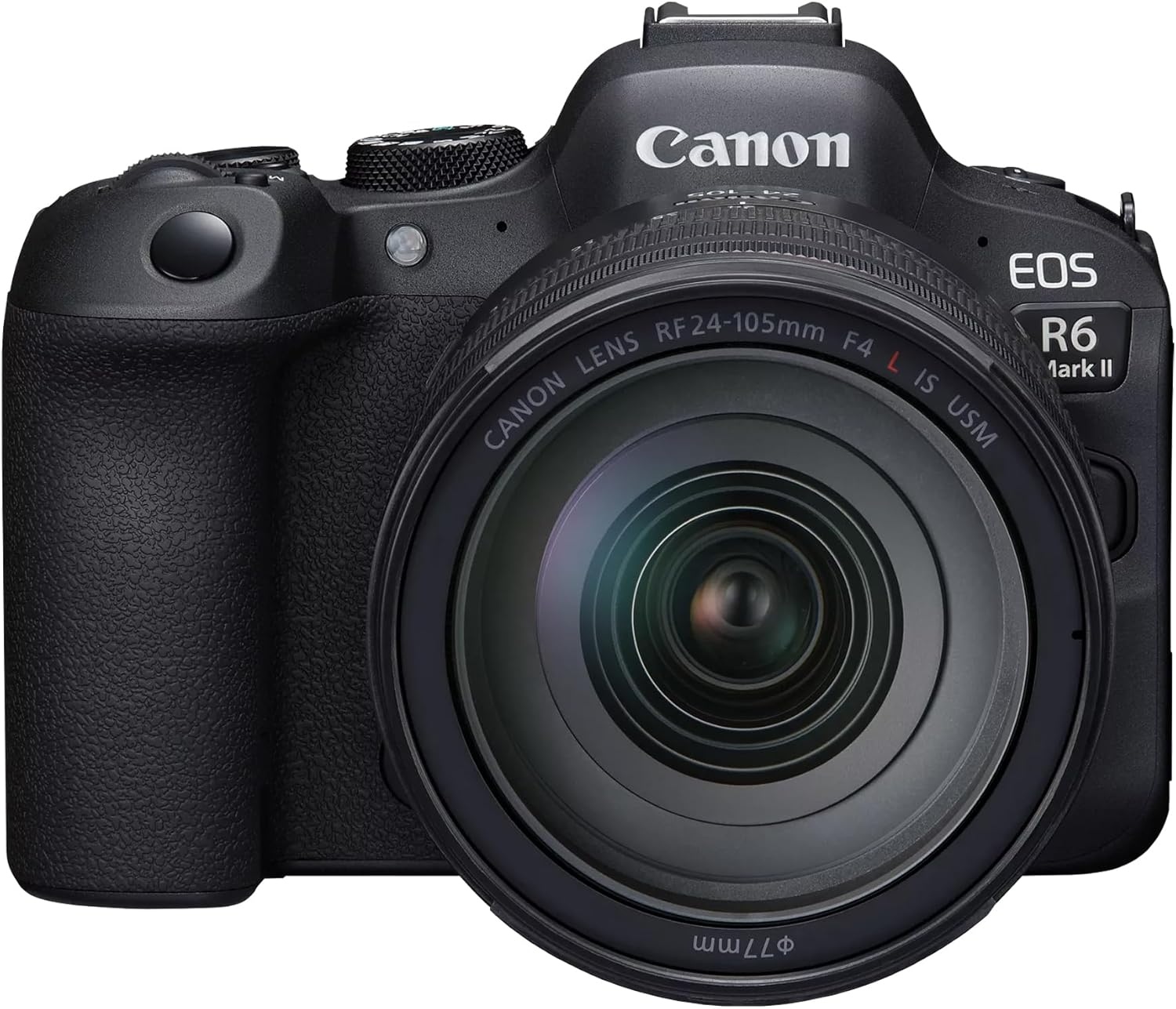
Canon EOS R6 Mark II
Full-frame Mirrorless · Body only
~£2,099
Canon's colour science has a long, well-earned reputation for warm, accurate skin-tone rendering across all complexions. The R6 Mark II's Dual Pixel metering reads natural-light scenes correctly without the underexposure bias that affects some competitors, and the 40fps burst catches expression in available light.
Why we chose it
The most important factor when photographing dark skin tones is not megapixels — it's dynamic range and metering. Modern mirrorless cameras default to matrix metering calibrated for mid-tones, which systematically underexposes darker complexions in high-contrast natural light. Canon's Dual Pixel metering system has been refined across multiple generations to read subject luminance more accurately — and the results are consistently better at the straight-from-camera stage.
Image quality
Canon colour science is not marketing — it has a genuine, observable difference in how it handles warm skin tones under natural light. The EOS R6 Mark II renders deep brown to dark brown tones with richness and separation in the midtones that other cameras produce only after post-processing. Highlight rolloff is smooth, and the 4K/60p Canon Log 3 profile offers substantial grading flexibility for video work.
Handling & feel
The vari-angle screen is invaluable for natural-light portraits — you can position the camera low, high, or at arm's length while confirming exposure on the screen. The 40fps electronic burst means you shoot through an expression sequence and choose the frame with the most natural feeling in edit.
Autofocus
Dual Pixel CMOS AF II tracks faces with consistency that removes technical distraction from portrait work. Eye AF priority in servo mode means the camera maintains sharp eyes through movement, and the 1,053-point coverage handles off-centre compositions without hunting.
Lens ecosystem
For skin-tone-focused portrait work on Canon RF, the RF 85mm f/2 Macro IS STM (~£549) is the natural starting point — sharp, compact, and affordable with excellent IS. The RF 50mm f/1.8 STM (~£169) is an excellent budget prime for environmental portraits. Step up to the RF 85mm f/1.2L USM (~£2,299) for the finest Canon portrait glass available.
Best for
Natural light portraits
Canon's metering reads skin luminance correctly in high-contrast natural light. Shadow areas retain detail.
Great fitStudio & flash portraits
Consistent, predictable colour rendering across different flash colour temperatures.
Great fitOutdoor & golden hour
Excellent highlight recovery preserves sky detail while keeping skin correctly exposed.
Great fitLow light & available light
ISO 6,400 files retain shadow detail and colour depth with minimal desaturation.
Great fitVideo portraits
Canon Log 3 and Eye AF in video — excellent for actor reels and documentary work.
Great fitAction & movement
40fps burst catches expression at peak moment — crucial for natural, unselfconscious portrait work.
Great fitStrengths
- Canon colour science — warm, accurate skin tones with minimal post-processing
- Dual Pixel metering reads natural light scenes without underexposure bias
- Dual Pixel AF II — the most natural-feeling face/eye tracking system
- Broad dynamic range for recovering shadow detail
- 40fps burst catches genuine expression in available light
- Excellent high-ISO performance for indoor natural light
Weaknesses
- 24.2MP — less resolution than the Sony A7 IV or Fujifilm X-T5 for heavy crops
- Dual SD UHS-II — no CFexpress for maximum write speed
- RF mount lenses are expensive relative to Sony FE equivalents
- £2,099 body-only before lenses
Also worth considering
Sony A7 IV
Full-frame Mirrorless
With the correct Picture Profile (S-Cinetone or PP3 for stills), the A7 IV produces skin-tone rendering that rivals Canon — and its 33MP resolution gives considerably more latitude for cropping and retouching. AI Eye AF reliability is class-leading.
Nikon Z6 III
Full-frame Mirrorless
Nikon's colour science produces rich, deep midtones with excellent shadow detail — particularly strong in available-light natural conditions. The partial-stacked sensor gives fast readout for clean high-ISO files that retain colour depth in low-contrast shadow areas.
Fujifilm X-T5
APS-C Mirrorless
Fujifilm's Eterna Cinema and Nostalgic Neg film simulations produce warm, rich skin tones with beautiful tonal gradation. The X-T5 requires more deliberate colour calibration than the Canon, but the results — particularly for editorial and fashion work — are distinctive and desirable.
The verdict
Camera metering systems have historically underexposed darker skin tones — and while all modern mirrorless cameras have improved significantly, there are genuine differences in how brands approach metering and colour rendering. Canon's colour science — particularly with Dual Pixel AF II metering — has a long reputation for accurate, warm rendering across all complexions. The EOS R6 Mark II's metering reads scene luminance more accurately in high-contrast natural light than most competitors at any price. Sony's A7 IV with S-Cinetone or the correct Picture Profile applied is also exceptional, and Nikon's Z6 III produces rich tonal depth with strong shadow detail. The key across all of them: RAW files with broad dynamic range give you control — the camera that best preserves shadow detail wins.
Also worth considering
Lumix S5 II
Full-frame · L-mount, phase-detect AF, excellent video colour
~£1,799
Sony A7C II
Full-frame compact · Same 33MP as A7 IV in a smaller body
~£1,999