Best cameras for portrait photography
The best cameras for portrait photography in 2026 — full-frame picks with exceptional Eye AF, beautiful skin-tone rendering, and the lens recommendations to match.
Our top recommendation
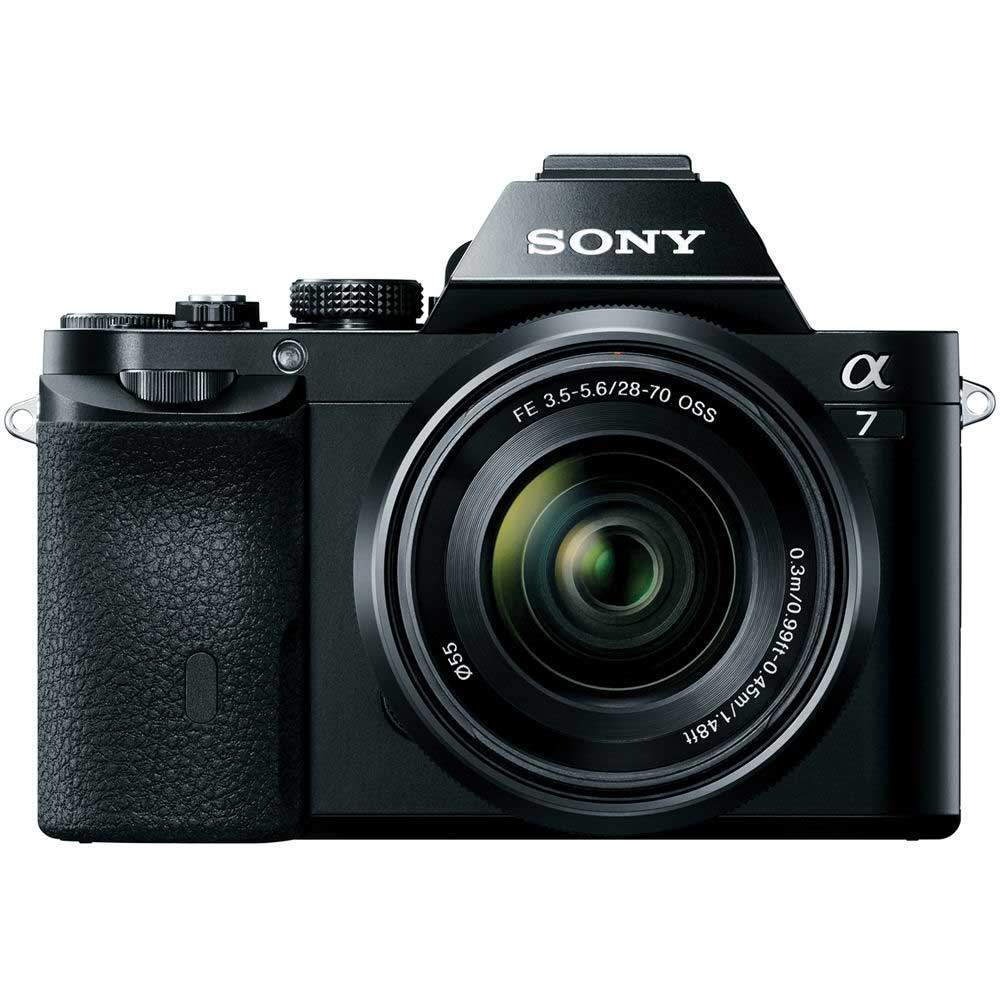
Sony A7 IV
Full-frame Mirrorless · Body only
~£2,299
The A7 IV is the full-frame portrait benchmark — 33MP sensor, AI Eye AF that locks on instantly, and full-frame background separation that makes subjects leap off the image. Sony's skin-tone rendering from BIONZ XR is natural, warm, and flattering without any post-processing.
Why we chose it
Portrait photography rewards cameras with two things above all: a sensor large enough to produce natural background blur, and autofocus reliable enough to nail the eyes every single time. The Sony A7 IV delivers both. Its 33MP full-frame BSI sensor captures fine details — individual eyelashes, skin texture, stray hairs — while the BIONZ XR processor renders skin tones with a warmth and accuracy that requires minimal retouching. Most importantly: the AI Eye AF just works.
Image quality
At ISO 800, the A7 IV produces portrait files that rival cameras at twice the price. Dynamic range is excellent — you can lift shadows from a backlit subject and recover highlight detail in a blown window simultaneously. The 33MP count means you can crop a full-body shot down to a tight headshot and still deliver a 20MP file for print.
Handling & feel
The A7 IV is a serious professional tool — the layout rewards experience, and the physical controls are well-positioned for fast shooting. The vari-angle screen is invaluable for low-angle seated portraits, and the large, deep grip makes extended shoots comfortable even with heavier portrait lenses attached.
Autofocus
Sony's AI subject recognition is the headline feature for portrait work. Human, animal, and bird detection operates in real time — and the Eye AF priority means the camera locks onto the nearest visible eye and holds it through movement, head turns, and partial obstructions. Miss rates are genuinely close to zero.
Lens ecosystem
Sony's FE mount is where portrait glass lives. For most shooters the 85mm f/1.8 FE (~£419) is the natural starting point — razor-sharp from f/1.8 with beautiful bokeh and a flattering compression for headshots. The 50mm f/1.8 FE (~£179) makes a superb budget starting lens with more environmental flexibility. Step up to the Sony 85mm f/1.4 GM II (~£1,599) or Tamron 45mm f/1.3 Di III (~£499) when you're ready to invest in glass.
Best for
Studio portraits
33MP sensor resolves fine detail in hair and eyes. Full-frame bokeh renders backgrounds as smooth as any camera at this price.
Great fitNatural light & outdoor
5.5-stop IBIS enables clean handheld shots in golden hour light without flash or a tripod.
Great fitLifestyle & documentary
AI Eye AF works in continuous shooting — subjects stay sharp whether still or moving.
Great fitWeddings & events
Dual card slots, reliable AF, and excellent high-ISO performance make it a dependable wedding body.
Great fitVideo portraits (reels/BTS)
4K/60p, S-Cinetone, and real-time Eye AF during video — a capable hybrid for portrait videography.
Great fitSports & action
30fps electronic burst is capable, though the primary strength of this body is stills quality over speed.
Good, not idealStrengths
- Full-frame sensor with class-leading background separation
- AI Eye AF locks onto subjects instantly — never misses
- 33MP resolution — crop heavily and still print large
- 5.5-stop IBIS for handheld available-light shooting
- Dual card slots — professional reliability
- Natural, warm skin-tone rendering straight from camera
Weaknesses
- £2,299 body-only — lenses are an additional cost
- Heavier than APS-C alternatives at 659g
- Single front control dial frustrates fast shooters
- Menu system steep for first-time Sony users
- 4K/60p can cause body warmth in extended sessions
Also worth considering
Canon EOS R6 Mark II
Full-frame Mirrorless
Canon's Dual Pixel CMOS AF II is arguably the best face-and-eye tracking system available. 40fps burst, full-frame sensor, and Canon's warm colour science make it exceptional for lifestyle and motion portraits.
Fujifilm X-T5
APS-C Mirrorless
40MP APS-C with Fujifilm's legendary colour rendering — portrait files from the X-T5 have a painterly, film-like quality that's genuinely unlike any other camera. Pair it with the XF 56mm f/1.2 R WR for breathtaking results.
Nikon Z6 III
Full-frame Mirrorless
Nikon's partial-stacked full-frame sensor delivers fast readout speeds with Nikon's renowned colour science. The Z 85mm f/1.8 S is one of the finest portrait lenses ever made.
The verdict
The Sony A7 IV is the standout portrait camera — full-frame background separation, AI Eye AF that tracks subjects without a second thought, and 33MP for tight crops that still print beautifully. But the camera is only half the equation. Pair it with an 85mm f/1.8 FE lens (~£419) for classic portrait compression, or the 50mm f/1.8 FE (~£179) if you want more environmental flexibility. If you're invested in Canon, the EOS R6 Mark II's Dual Pixel AF is exceptional — and the RF 85mm f/2 IS STM (~£549) is one of the sharpest portrait lenses available. For Fujifilm shooters, the X-T5 paired with the XF 56mm f/1.2 R WR produces portrait images with a painterly quality that's genuinely unique.
Also worth considering
Sony A7C II
Compact full-frame · More portable portrait option
~£1,499
Fujifilm GFX 50S II
Medium format · For studio portrait specialists
~£2,999