Best cameras for travel photography
The best cameras for travel photography in 2026 — compact, lightweight bodies with weather sealing, excellent image quality, and the versatility to cover landscapes, street, and portraits in one trip.
Our top recommendation
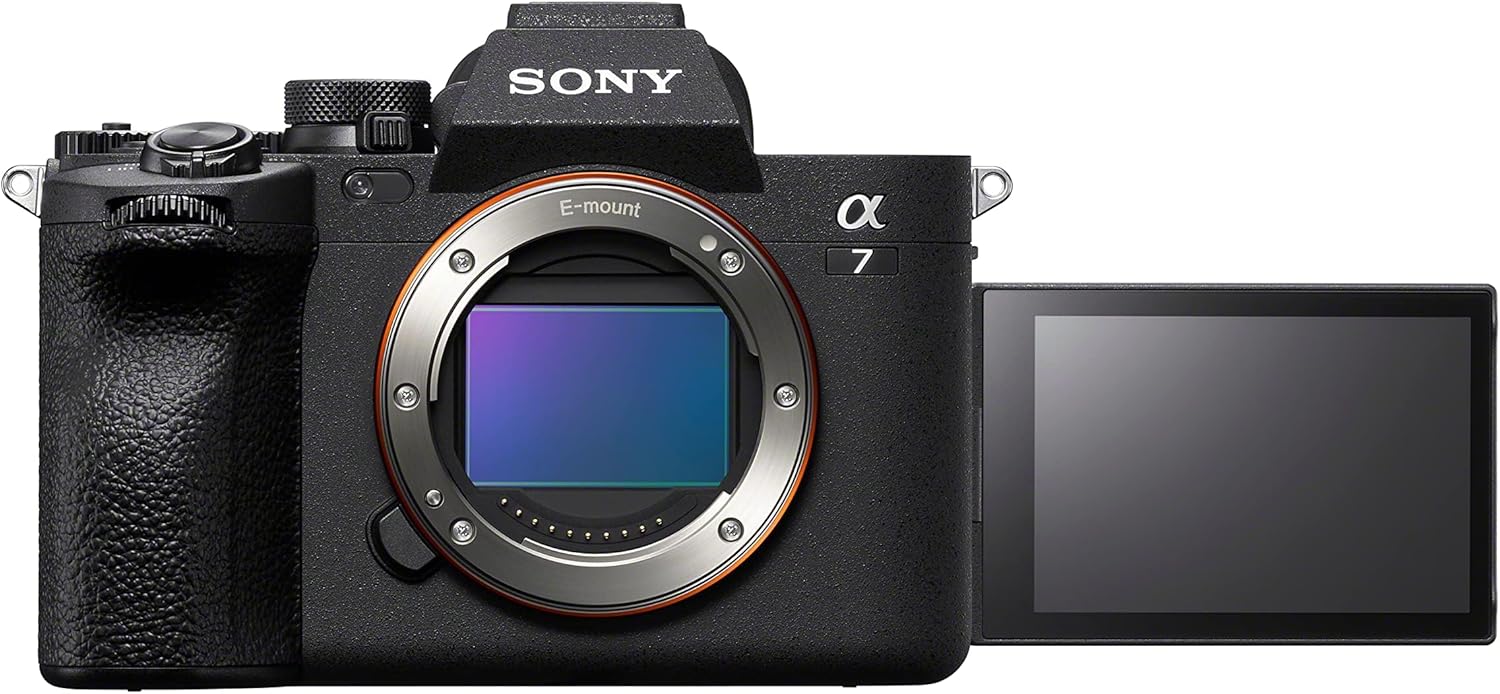
Sony A7C II
Full-frame Mirrorless · Body only
~£1,999
Full-frame image quality in the most compact Sony body available. The A7C II brings the A7 IV's 33MP sensor, AI Eye AF, and 5-stop IBIS to a genuinely pocketable form factor — the ideal compromise for travel.
Why we chose it
Travel photography demands a camera that goes everywhere without becoming a burden. The A7C II weighs just 514g and fits in a coat pocket alongside a compact zoom — yet it delivers the full-frame sensor, AI Eye AF, and IBIS of a professional body. You lose nothing of substance over the A7 IV except some grams and a card slot.
Image quality
Full-frame travel photography looks different from APS-C. The 33MP sensor captures scenes with natural depth and tonal range — landscapes resolve detail from foreground to horizon, low-light images have clean ISO structure, and portraits shot open-aperture have the background separation that elevates travel photography from snapshots.
Handling & feel
The compact body takes adjustment if you're used to larger cameras — the controls are tighter and the grip shallower. But once dialled in, it's remarkably natural to shoot one-handed, and the vari-angle screen handles everything from low-angle architecture to over-crowd shooting without contortion.
Autofocus
Sony's AI Eye AF works on strangers, crowds, and moving subjects equally. For travel portraits — a quick shot of a market trader, a child running — the camera finds the eye, holds it, and fires. The miss rate approaches zero in good light, which means fewer throwaway frames and more keepers.
Lens ecosystem
For travel, the Tamron 28-75mm f/2.8 Di III VXD G2 (~£579) is the single-lens solution — wide enough for architecture, tight enough for portraits, fast enough for low light. Pair it with the Sony FE 20mm f/1.8 G (~£649) for landscapes and interiors where you need to go wider. Both are compact enough for a travel bag.
Best for
Landscape & architecture
33MP resolves wide scenes with room to crop. IBIS handles handheld shots at slow shutter speeds.
Great fitStreet & travel portraits
AI Eye AF works on the fly for candid portraits. Full-frame background separation elevates travel portraits.
Great fitLow-light & interiors
Full-frame high-ISO performance handles dim museums, restaurants, and night scenes.
Great fitVideo travel diary
4K/60p 10-bit with IBIS — clean, stable travel footage with cinematic quality.
Great fitWildlife on the road
AI subject recognition handles birds and animals well, though the compact body limits long-lens balance.
Good, not idealAdventure & action
No weather sealing — keep it out of rain and dust. For adventure travel, the OM-5 is the better choice.
Good, not idealStrengths
- Full-frame quality in Sony's most compact mirrorless body
- AI Eye AF — the same system as the A7 IV
- 33MP with strong dynamic range — versatile for all travel genres
- 5-stop IBIS for handheld low-light without a tripod
- Excellent FE lens ecosystem for every focal length
- 4K/60p 10-bit for high-quality travel video
Weaknesses
- No weather sealing — vulnerable in rain and dust
- Single card slot only
- EVF resolution lower than A7 IV at 2.36M dots
- £1,999 body-only — lenses add to a significant total
- Battery life moderate at ~560 shots
Also worth considering
Fujifilm X-S20
APS-C Mirrorless
The most well-rounded travel camera at under £1,000. IBIS, improved battery life (720 shots), film simulations, and excellent video performance — the X-S20 covers every travel scenario without asking much in return.
OM-5
Micro Four Thirds Mirrorless
Dust, splash, and freeze-proof, with class-leading 7.5-stop IBIS — the OM-5 is purpose-built for travel in challenging conditions. Smaller and lighter than any full-frame option, with an excellent Micro Four Thirds lens ecosystem.
Fujifilm X100VI
APS-C Fixed-lens Compact
The fixed 23mm f/2 lens simplifies every travel decision — one focal length, one camera, no bag of lenses. The X100VI produces 40MP images with Fujifilm's best film simulations in the most portable format possible.
The verdict
The best travel camera is the one you'll actually carry. The Sony A7C II squeezes full-frame quality into the smallest body Sony makes — you get the sensor, the Eye AF, and the IBIS without the weight penalty. For photographers who want lighter still, the Fujifilm X-S20 is arguably the most complete travel package at the money: compact APS-C, IBIS, excellent battery life, and film simulations that mean you come home with finished images rather than RAW files waiting to be processed. If you shoot in challenging conditions — rain, dust, heat — the OM System OM-5 is in a class of its own for weather-sealed compact travel photography.
Also worth considering
Sony A6700
APS-C · Compact with Sony AF + IBIS at a lower price point
~£999
Ricoh GR IIIx
APS-C compact · Ultra-pocketable for minimalist travellers
~£999