Best cameras for video & YouTube
The best cameras for video and YouTube in 2026 — purpose-built creators' cameras with great autofocus, articulating screens, and clean 4K footage.
Our top recommendation
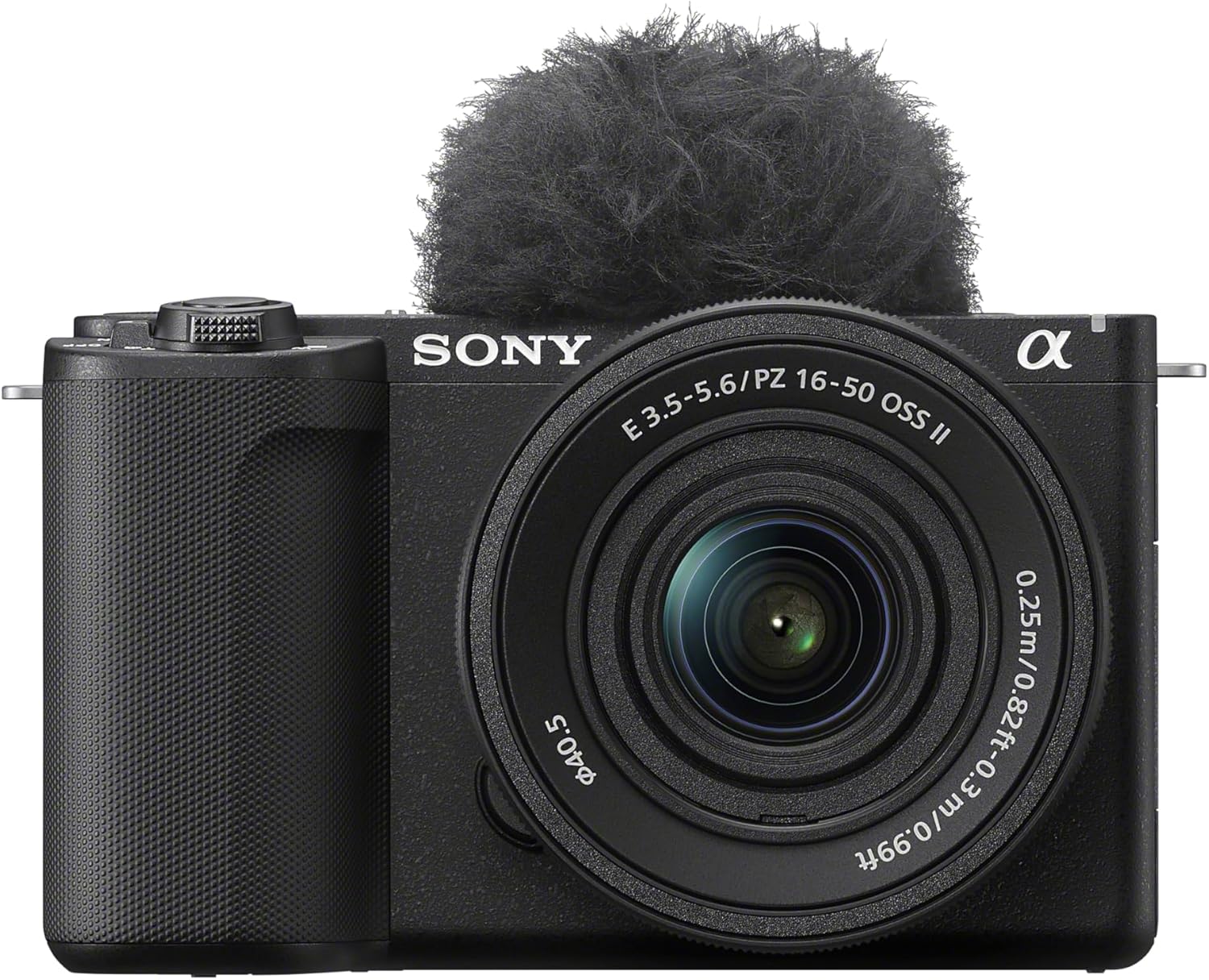
Sony ZV-E10 II
APS-C Mirrorless · Creator camera
~£679
Sony built the ZV-E10 II specifically for solo creators — and it's better for YouTube than any general-purpose camera at this price. Articulating screen, directional 3-capsule mic, real-time Eye AF, and 4K/60p in a compact body that weighs under 300g.
Why we chose it
Most cameras are designed for photographers who also shoot video. The ZV-E10 II is the opposite — it was built for creators who primarily make video, and the difference shows. The placement of the record button, the Product Showcase AF mode that refocuses to objects you hold up to camera, the directional microphone that rejects background noise from behind — these are not afterthoughts. This is a camera that gets out of your way and lets you focus on making content.
Image quality
4K/60p footage from the ZV-E10 II is oversampled from the full APS-C width — you're not just pixel-binning, you're downsampling from a higher-resolution read for genuinely sharp, detailed 4K. S-Cinetone gives warm, filmic colour right from the card. At 1080p/120p you get smooth slow-motion that works well for transitions and highlights without needing a dedicated high-speed camera.
Handling & feel
The fully articulating screen flips out for direct-to-camera recording, rotates for low and high angles, and folds inward to protect itself when packed. The record button sits exactly where your thumb rests. USB-C charging means you can top up with a power bank while shooting. Every detail here is creator-focused.
Autofocus
Real-time Eye AF runs continuously during video recording — the camera maintains subject lock through movement, head turns, and partial obstructions. The 'Product Showcase' mode is unique: hold something up to the camera and it switches focus to the object automatically, then returns to your face when you lower it. It sounds gimmicky; creators who use it say it changes how they work.
Lens ecosystem
Sony's E-mount is the most video-friendly interchangeable lens ecosystem available. The Sigma 16mm f/1.4 DC DN (~£349) is the benchmark wide vlogging lens — sharp, fast, and optically stabilised. The Sony 24mm f/1.8 ZA (~£599) gives a tighter framing with beautiful background separation. For indoor interviews, a 35mm or 50mm prime at f/1.8 produces professional footage even in low light.
Best for
YouTube & talking-head video
Articulating screen, Eye AF during recording, and a built-in directional mic mean you can go solo with no crew.
Great fitShort-form (Reels, TikTok)
Compact, fast to set up, and the vertical shooting workflow is intuitive for social-first creators.
Great fitTravel vlogging
Under 300g with a prime lens, 4K footage, and stabilised with compatible lenses — purpose-built for travel.
Great fitCinematic / narrative video
S-Cinetone gives you a solid colour science starting point, though no internal ND and limited codec options.
Good, not idealLive events & run-and-gun
Reliable AF handles unpredictable subjects. No weather sealing means care around rain.
Good, not idealStudio photography (stills)
26MP sensor is capable for stills — though the focus is clearly video. No EVF limits the stills experience.
Good, not idealStrengths
- Designed specifically for creators — every control is in the right place
- Directional 3-capsule microphone is genuinely useful built-in audio
- Real-time Eye AF during video — no missed subjects
- 4K/60p with S-Cinetone for instant cinematic colour
- Fully articulating screen — essential for solo shooting
- E-mount opens up a vast ecosystem of affordable lenses
Weaknesses
- No in-body stabilisation — needs OIS lens or electronic steady shot
- Single card slot — not ideal for important shoots
- No viewfinder (EVF) for stills use
- Electronic stabilisation slightly crops the frame
- Gets warm in extended 4K recording sessions
Also worth considering
Sony A6700
APS-C Mirrorless
Step up to the A6700 when you need 4K/120p for genuine slow-motion work, 5-axis IBIS for handheld b-roll without lens OIS, and professional-grade subject tracking for dynamic shooting scenarios.
Canon EOS R50
APS-C Mirrorless
The R50 is perfect for new YouTubers who want simplicity above everything — Canon's Dual Pixel AF is best-in-class for faces, the guided interface is beginner-friendly, and the vari-angle screen makes solo shooting easy.
Fujifilm X-S20
APS-C Mirrorless
For creators who want a cinematic, film-inspired look built into the footage itself, the X-S20 is the answer. Fujifilm's 20 film simulations apply a distinct colour grade in-camera — less grading work in post, more time creating.
The verdict
For most YouTubers and video creators the Sony ZV-E10 II is the easy recommendation — it was designed from the ground up for solo creators, and it shows in every detail. The directional microphone, articulating screen, and real-time Eye AF mean you can set it up, press record, and focus on what you're saying rather than fighting the camera. Step up to the Sony A6700 if you need 4K/120p for slow-motion work, or the Fujifilm X-S20 if you want that cinematic film-simulation look built into your footage without grading. One thing every video camera benefits from: a fast prime lens. A 24mm or 35mm f/1.8 wide open will give your footage that professional depth-of-field separation that viewers immediately associate with quality content.
Also worth considering
Sony ZV-1 II
1-inch compact · Pocket-sized vlogging option
~£649
Nikon Z30
APS-C · Budget-friendly video with subject tracking
~£479