Lens mounts · Leica M
Leica M mount: cameras, lenses & what adapts
Leica's rangefinder mount since 1954, manual focus only, with the deepest range of compact manual primes from Leica and third parties.
Full frame imaging circle· 27.80mm flange distance· Rangefinder, since 1954
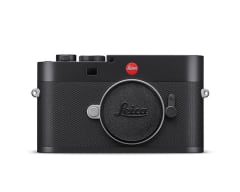
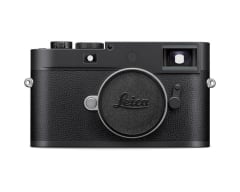
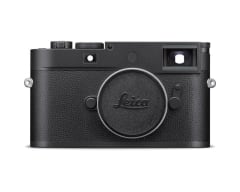
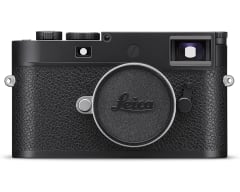
Cameras on Leica M
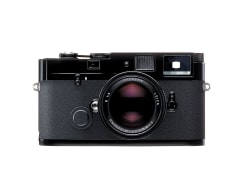
Every body in the catalogue that takes Leica M lenses, newest first. Prices are the best new price from a UK retailer we track.
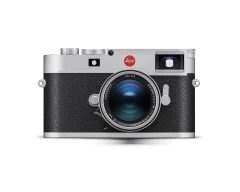
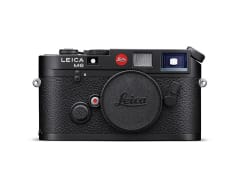
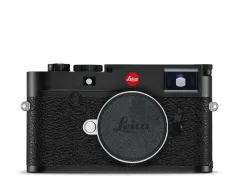
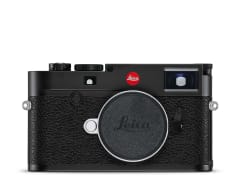
Lens range
75 Leica M lenses in the catalogue. Native means made by a company that also makes Leica M bodies; third-party is everyone else.
Best Leica M lenses by genre
Top three per genre from the lens engine, scored on this lens's own format. The same scores you see on each lens page; Gear Builder re-scores them for the exact body you pick.
No Leica M lens in the catalogue qualifies for vlogging — manual-focus lenses are gated out of genres that need tracking autofocus.
No Leica M lens in the catalogue qualifies for sports & action — manual-focus lenses are gated out of genres that need tracking autofocus.
No Leica M lens in the catalogue qualifies for wildlife — manual-focus lenses are gated out of genres that need tracking autofocus.
Flange distance & adapting
A plain adapter is a spacer: it can only add distance between lens and sensor. Glass from a mount with a longer flange distance adapts cleanly onto Leica M; glass from a shorter one needs corrective optics.
- Type
- Rangefinder
- Coverage
- Full frame
- Crop factor
- 1.00×
- Maker
- Leica
- Introduced
- 1954
Lenses you can put on a Leica M body
25 other mounts adapt onto Leica M without corrective glass. Focus and framing only; autofocus and aperture control depend on the adapter.
Adapters we list for Leica M bodies
- Urth Canon (EF/EF-S) Lens Mount to Leica M Camera Mount Canon EF lenses · manual
- Urth Canon FD Lens Mount to Leica M Camera Mount Canon FD lenses · manual
- Urth Contax/Yashica (C/Y) Lens Mount to Leica M Camera Mount Contax/Yashica lenses · manual
- Urth Leica R Lens Mount to Leica M Camera Mount Leica R lenses · manual
- Urth M39 Lens Mount to Leica M Camera Mount (28-90mm Frame Lines) Leica Screw Mount (M39) lenses · manual · 3 options
- Urth M42 Lens Mount to Leica M Camera Mount M42 lenses · manual
- Urth Nikon F (G-Type) Lens Mount to Leica M Camera Mount Nikon F lenses · manual · 2 options
Where Leica M lenses can go
Current camera mounts that accept Leica M glass: 8 with a plain or thin adapter.
How deep is the Leica M lens range?
The lens-ecosystem scores Camera Match uses when it ranks Leica M bodies for wildlife, sports, portrait, macro, food, architecture and astro. Scored 0–10 from the native lenses buyable new, with the reasoning shown.
Rangefinder system tops out at 135 mm (APO-Telyt-M 135 f/3.4) and everything is manual focus — no AF lens of any length. Source ↗
Noctilux-M 75 f/1.25, APO-Summicron-M 75 f/2 and 90 f/2, Summilux-M 90 f/1.5, Voigtländer 75 f/1.5 Nokton — superb but manual focus only, which costs three points for eye-AF-dependent work. Source ↗
Macro-Elmar-M 90 f/4 reaches 1:3 (1:2 only with the macro adapter M); no native 1:1 lens and no AF. Source ↗
Super-Elmar-M 18 f/3.8, Super-Elmar-M 21 f/3.4, Voigtländer 10 f/5.6, 12 f/5.6 and 15 f/4.5 Heliar, Laowa 9 f/5.6 and 14 f/4 in M — excellent rectilinear ultra-wides, but no shift or tilt-shift lens. Source ↗
Summilux-M 21 f/1.4 and 24 f/1.4, Voigtländer 21 f/1.4 Nokton, Laowa 15 f/2 Zero-D M — fast wides exist and MF is fine for astro, but rangefinder bodies lack the interval/long-exposure toolset and the choice is small. Source ↗
Batteries, cards & filters for Leica M
The battery models and card types Leica M bodies use, and the most common filter threads on Leica M lenses. Each links to the cameras or lenses that share it and what to buy.
Next step
Lens counts and picks come from the catalogue and the lens engine, so they change as lenses are added. Ecosystem scores are researched per mount with a source and feed Camera Match's lens-range feature. How scoring works · All mounts